Bob Seger: The Rugged Voice of Heartland Grit
Bob Seger’s voice growls, a weathered thread weaving rock’s fire with soul’s tender ache. From Detroit’s grit, he thunders. Yet, what drove him to make music his life? It was honesty—the need to sing life’s raw truths. As a teen, he rocked dive bars, dreaming of stages beyond Michigan’s shadows. Consequently, music became his soul, forging a timeless legacy.
The Truth That Shaped His Song
Seger’s primary motivator was capturing the human struggle in song. Growing up in Ann Arbor, he loved Elvis Presley. His family valued resilience, but Bob craved authentic expression. By 15, he was writing tunes, his growl a fierce spark. Thus, music offered a way to voice the heartland, to connect with workers’ dreams.
A Michigan Rebel’s Roots
Bob Seger (born Robert Clark Seger, May 6, 1945) grew up in Ann Arbor, Michigan, in a working-class family. His parents, Stewart and Charlotte, filled their home with big band records. Meanwhile, his older brother introduced him to Chuck Berry, sparking guitar fever. As a kid, Bob was restless, singing at school events. His family, including a sibling, cheered his basement jams. Consequently, he grew up lost in James Brown’s soul, his passion bold.
In high school, Seger attended Ann Arbor High, skipping college for music. At 16, he formed The Decibels, covering “Hound Dog.” Meanwhile, he gigged at Detroit’s bars, winning local fans. After graduating, he worked odd jobs—dishwasher, clerk—but music ruled. However, his 1964 single “East Side Story” with The Last Heard caught buzz. Moving to Detroit’s scene, he signed with Cameo-Parkway. Consequently, his early hustle forged a career of rugged glory.
A Legacy of Rock and Soul
Seger’s career is a heartland rock pillar, blending gritty vocals with soulful storytelling, peaking in the 1970s–1980s. Initially, his 1968 debut, Ramblin’ Gamblin’ Man, hit No. 62 on Billboard’s 200, with the title track (No. 17). His 1976 album, Night Moves, reached No. 8, driven by Night Moves (No. 4). Meanwhile, Stranger in Town (1978) went six-times platinum, with Old Time Rock and Roll. In 1980, Against the Wind topped charts. Additionally, Ride Out (2014) hit No. 3. Consequently, he’s spanned five decades, his sound a cultural roar.
Seger’s main band, The Silver Bullet Band, formed in 1974, with Drew Abbott (guitar), Alto Reed (sax), Chris Campbell (bass), and Charlie Allen Martin (drums). Current members include Rob McNelley (guitar) and Jim “Moose” Brown (keys). Meanwhile, he’s toured with Bruce Springsteen, Eagles, and ZZ Top, headlining arenas. His 2019 Detroit farewell show drew 20,000. Additionally, television appearances include Saturday Night Live (1987) and The Tonight Show (2014). Film contributions include Old Time Rock and Roll in Risky Business (1983) and Shinin’ Brightly in Mask (1985).
Collaborations include Don Was, who produced Against the Wind, and Kid Rock, duetting on “Collide.” Furthermore, Seger’s mentorship by Glenn Frey shaped his craft. Awards are significant. He won a Grammy for Best Rock Performance for Against the Wind (1981). Consequently, he earned a 2004 Rock Hall induction and 2012 Songwriters Hall nod. Additionally, his 2015 Kennedy Center Honors tribute affirms his impact.
Biggest Songs and Their Writers:
– Night Moves – Written by Bob Seger (from Night Moves, 1976)
– Old Time Rock and Roll – Written by George Jackson, Thomas E. Jones III (from Stranger in Town, 1978)
– Against the Wind – Written by Bob Seger (from Against the Wind, 1980)
– Turn the Page – Written by Bob Seger (from Live Bullet, 1976)
Bands and Stage Companions
Seger’s primary band is The Silver Bullet Band, formed in 1974. He earlier led The Bob Seger System and The Last Heard. Meanwhile, solo work like Brand New Morning (1971) stood apart. His collaboration with Was, who shaped Stranger in Town, was pivotal. Additionally, Reed’s iconic sax defined their live energy.
Relationships and Headlines
Seger’s personal life is private, with some spotlight. He married Juanita Dorricott in 1993, raising kids Cole and Samantha. His earlier marriages to Renee Andrietti (1968) and Annette Sinclair (1987) drew brief buzz. Meanwhile, his friendship with Kid Rock, sparked by Detroit gigs, grabs headlines. Additionally, Seger’s active on X, sharing tour and studio posts. However, his 2017 tour cancellation for back surgery worried fans. Consequently, his 2019 recovery and farewell tour boosted his legend.
Controversies and Challenges
Seger’s career is largely clean, with minor ripples. His 1980s shift to polished production sparked purist backlash, citing “overproduced” sound. Critics argued Like a Rock lost grit; fans loved its heart. Meanwhile, a 1996 DUI arrest in Michigan stirred tabloid buzz, quickly settled. Additionally, his 2017 spinal injury, halting a tour, alarmed supporters. Nevertheless, Seger’s resilience shone through. Thus, challenges were fleeting, his voice enduring.
A Night of Detroit Fire
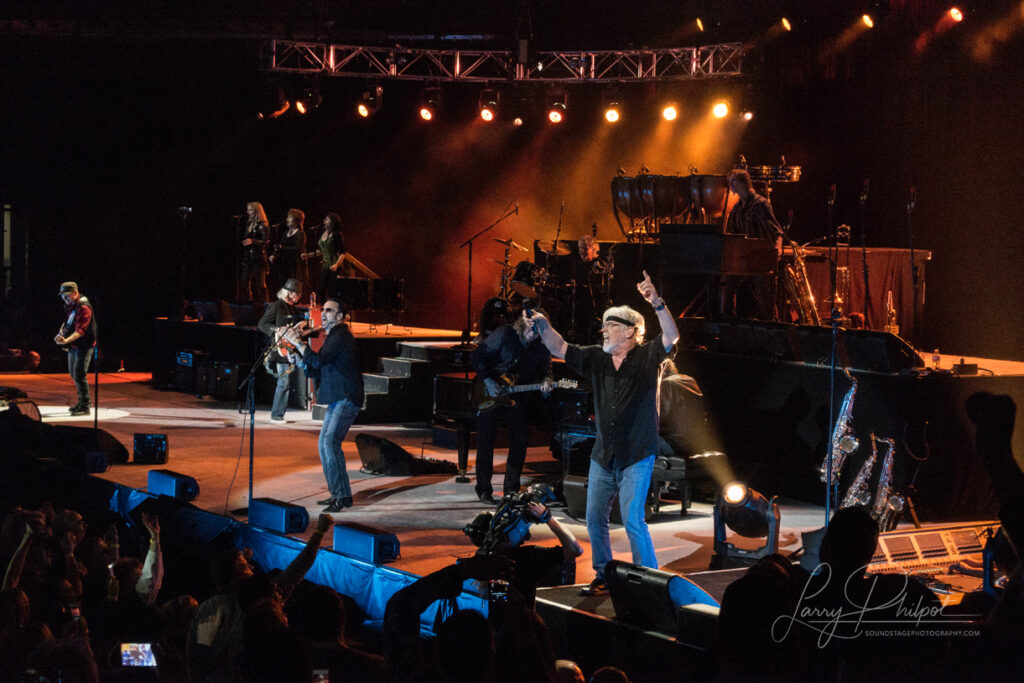
In December 2011, Seger played Detroit’s Palace of Auburn Hills, a career-defining homecoming. The packed 15,000 fans roared as he opened with Roll Me Away. His voice, gravelly and soulful, shook the arena. Midway, he shared a story about writing Night Moves in a ’62 Chevy. The crowd cheered, lighters glowing. Consequently, Kid Rock joined for a surprise duet on Old Time Rock and Roll, guitars blazing. Fans danced, lost in Motor City magic. As he closed with Against the Wind, Seger grinned, saying, “This is my town.” Backstage, he hugged the Silver Bullet Band, alive with pride. That night, he wasn’t just a rocker—he was Detroit’s heart, his growl eternal.
The Road Rolls On
Seger (born May 6, 1945) calls Detroit home, his legacy towering. His voice, still rugged, carries the heartland’s soul. As he plans select 2025 shows, fans crave his fire. Meanwhile, his Grammy, Rock Hall, and 50 million albums affirm his reign. Consequently, Bob Seger remains rock’s honest voice, his songs a timeless ride.