Del McCoury Band: Bluegrass Legends Born from Tradition
The mountains of North Carolina whispered to Del McCoury, their ancient songs shaping his destiny. Born on February 1, 1939, in York, Pennsylvania, McCoury grew up steeped in the sounds of bluegrass. Yet, it was hearing Bill Monroe, the father of bluegrass, that lit a fire in his soul. At 18, he picked up a banjo, determined to carry forward the genre’s raw, heartfelt spirit. Consequently, his pursuit of music wasn’t about fame—it was about preserving a legacy.
The Spark That Ignited a Career
McCoury’s childhood was filled with music. His older brother played fiddle, and their home echoed with radio broadcasts. However, Monroe’s high-lonesome sound captivated him. After moving to Maryland, he joined local bands, honing his craft. Meanwhile, a chance encounter with Monroe in 1963 changed everything. The bluegrass pioneer hired him, setting McCoury on a path to stardom. Thus, his primary motivator was a deep respect for bluegrass tradition, a calling to keep its flame alive.
A Thorough Biography
Delano Floyd McCoury was born in York, Pennsylvania, but his family soon relocated to North Carolina’s mountains. His parents, devout Baptists, filled their home with gospel hymns. As a boy, Del loved the Grand Ole Opry broadcasts, especially Flatt & Scruggs. By his teens, he was playing banjo, inspired by Earl Scruggs’ three-finger style. After high school, he worked as a logger, playing music on weekends. In the late 1950s, he switched to guitar and began singing lead, finding his voice.
In 1963, McCoury joined Bill Monroe’s Blue Grass Boys, a pivotal moment. He played banjo and sang high tenor, learning from the master. After a year, he left to start a family, marrying Jean in 1964. They settled in Pennsylvania, raising two sons, Ronnie and Rob. By 1967, he formed Del McCoury and the Dixie Pals, which evolved into the Del McCoury Band in 1987. Now 86, McCoury lives in Nashville, still touring with his sons and bandmates, a living legend of bluegrass.
Career Biography: Bands, Collaborations, and Achievements
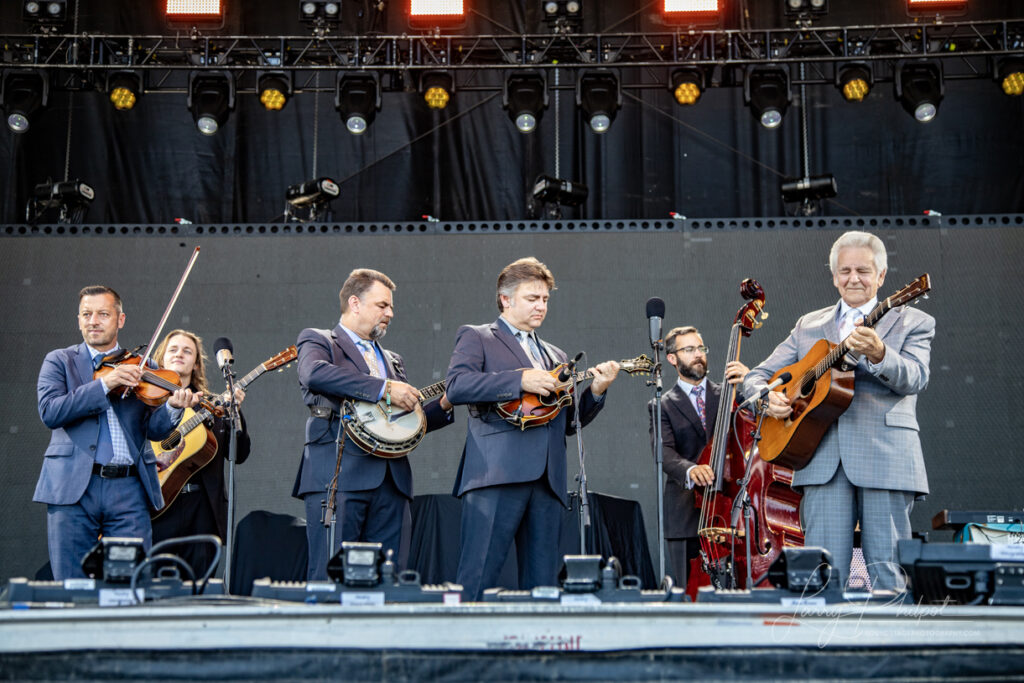
The Del McCoury Band is a cornerstone of bluegrass, blending tradition with innovation. Del formed the group in 1967 as the Dixie Pals, renaming it in 1987. The current lineup, solidified in the 1990s, includes Del McCoury (guitar, vocals), Ronnie McCoury (mandolin), Rob McCoury (banjo), Jason Carter (fiddle), and Alan Bartram (bass). Their tight harmonies and virtuosic playing define their sound. Additionally, Del briefly played with Bill Monroe’s Blue Grass Boys (1963–1964) and led earlier groups like The Golden State Boys.
Collaborations have enriched McCoury’s career. He’s worked with Vince Gill, Sam Bush, Alison Krauss, and Dierks Bentley, notably on Bentley’s Up on the Ridge. His 2008 album with The Preservation Hall Jazz Band fused bluegrass with New Orleans jazz. Furthermore, he’s joined The String Cheese Incident and Phish for festival performances, broadening bluegrass’s reach. His friendship with Jerry Garcia also made headlines, as Garcia cited McCoury as an influence.
McCoury’s television appearances include Late Night with David Letterman, The Grand Ole Opry, and PBS’s Austin City Limits. He’s also featured in documentaries like High Lonesome (1991). Moreover, his music appeared in films such as The Marty Stuart Show and The Broken Circle Breakdown (2012). In 2011, he hosted the International Bluegrass Music Awards, cementing his status as an ambassador.
Awards define McCoury’s legacy. He’s won two Grammy Awards (2006, Best Bluegrass Album; 2014, Best Bluegrass Album). The International Bluegrass Music Association named him Entertainer of the Year nine times. In 2010, he received the National Heritage Fellowship from the NEA, a lifetime achievement honor. Additionally, McCoury was inducted into the Bluegrass Music Hall of Fame in 2011 and the Grand Ole Opry in 2003, a rare double honor.
Here are some of their biggest songs, with their writers:
- High on a Mountain (Writer: Ola Belle Reed)
- Cold Rain and Snow (Traditional, arranged by Del McCoury)
- 1952 Vincent Black Lightning (Writer: Richard Thompson)
- My Love Will Not Change (Writers: John Pennell, Del McCoury)
Controversies and Newsworthy Moments
McCoury’s career has been remarkably controversy-free, a testament to his integrity. However, in 2005, a minor stir arose when he criticized modern country’s pop leanings. Some fans felt he was dismissing younger artists, but he clarified his love for traditional sounds. Additionally, in 2017, a festival cancellation due to weather sparked debate among fans over refunds. McCoury stayed silent, letting organizers handle the fallout. Meanwhile, his outspoken support for preserving bluegrass has occasionally clashed with industry trends, though he’s remained diplomatic.
A Memorable Performance: MerleFest 1998
In April 1998, the Del McCoury Band took the stage at MerleFest in Wilkesboro, North Carolina, a moment etched in bluegrass history. The sun was setting, casting a golden glow over the crowd. Del, then 59, stood center stage, his silver hair gleaming. As they launched into “High on a Mountain,” the audience swayed, some closing their eyes to feel the music. Midway through, Del invited Doc Watson, the festival’s founder, to join them. The two traded verses on “Roll in My Sweet Baby’s Arms,” their voices blending like old friends. The crowd erupted, tears streaming down weathered faces. Ronnie McCoury’s mandolin solo soared, and Jason Carter’s fiddle danced. Del later called it “a night where the music felt bigger than us.” That performance solidified their MerleFest legacy, drawing new fans to bluegrass.
Legacy and Looking Forward
The Del McCoury Band remains a beacon of bluegrass. Their 2025 tour includes stops at Telluride Bluegrass Festival and Grey Fox Bluegrass Festival, with Sierra Hull as a frequent collaborator. Meanwhile, Del mentors young artists like Billy Strings, ensuring the genre’s future. His sons, Ronnie and Rob, carry the family torch, blending innovation with tradition. For Del, music is a mission. As he sings in “1952 Vincent Black Lightning,” it’s about telling stories that endure, note by heartfelt note.