Dwight Yoakam: The Honky-Tonk Rebel’s Cry
Dwight Yoakam’s voice twangs sharp, a lonesome blade cutting through country’s soul. From Kentucky’s hills, he forged a legacy. Yet, what drove him to make music his life? It was tradition—the pull of Hank Williams’ raw truth. As a boy, he sang along, dreaming of stages beyond his roots. Consequently, music became his rebellion, carrying him to honky-tonk glory.
The Spark That Lit His Path
Yoakam’s primary motivator was reviving classic country. Growing up in Pikeville, Kentucky, he adored Williams and Buck Owens. His parents valued hard work, but Dwight found purpose in twang. By his teens, he was strumming guitar, his voice a natural draw. Thus, music offered a way to honor roots, to fight Nashville’s polish.
A Life Rooted in Song
Dwight Yoakam was born on October 23, 1956, in Pikeville, Kentucky, to a working-class family. His parents, David and Ruth Ann, instilled grit in their son. Meanwhile, his grandmother, a church singer, sparked his love for melody. As a child, Dwight was curious, often mimicking Johnny Cash records. His family moved to Columbus, Ohio, when he was young. Consequently, he grew up blending Appalachian soul with Midwest hustle.
In grade school, Yoakam shone in drama, playing leads in school plays. At Northland High School, he joined folk bands, winning talent shows. Meanwhile, he taught himself banjo, inspired by Flatt & Scruggs. He briefly attended Ohio State University in 1974, studying philosophy. However, music’s call was louder. In 1977, he moved to Nashville, seeking a break. Finding it too commercial, he relocated to Los Angeles in 1978. Consequently, his early defiance shaped a career of authenticity. There, he played dive bars, blending country with punk-rock energy.
A Career of Twang and Triumph
Yoakam’s career is a beacon of honky-tonk revival, blending tradition with edge. Initially, he self-funded his 1984 EP, Guitars, Cadillacs, Etc., Etc., a raw hit. Signed to Reprise Records, his 1986 debut album of the same name went double platinum. Meanwhile, Hillbilly Deluxe (1987) and Buenas Noches from a Lonely Room (1988) solidified his stardom, with “Streets of Bakersfield” hitting No. 1. In the 1990s, If There Was a Way (1990) and This Time (1993) went platinum, showcasing his songwriting. Additionally, Tomorrow’s Sounds Today (2000) kept his sound fresh.
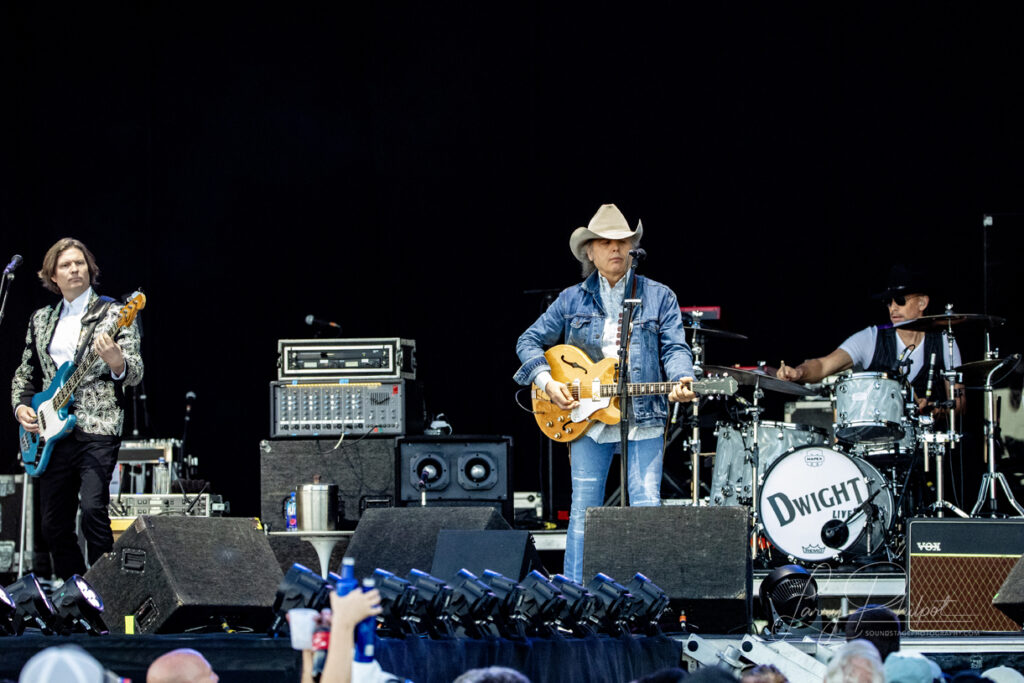
His 2005 album, Blame the Vain, marked a creative peak, while 3 Pears (2012) earned critical praise. In 2016, Swimmin’ Pools, Movie Stars reimagined his hits as bluegrass. His live shows, like 2019’s Vegas residency, are electric, blending swagger and soul. During the pandemic, he streamed acoustic sets, his voice timeless. Meanwhile, television appearances include Late Night with David Letterman (1986) and King of the Hill (2002, voice). His film roles shine brighter, with standout performances in Sling Blade (1996), The Newton Boys (1998), and Wedding Crashers (2005).
His collaborations are iconic. He duetted with Buck Owens and toured with Lucinda Williams. Furthermore, he mentored young acts like Sturgill Simpson. His awards include two Grammys: Best Male Country Vocal Performance for “Ain’t That Lonely Yet” (1994) and Best Country Collaboration for “Same Old Train” (1999). Consequently, he was inducted into the Nashville Songwriters Hall of Fame in 2019 and received a 2012 ACM Cliffie Stone Pioneer Award. Additionally, he earned a star on the Hollywood Walk of Fame in 2003.
Biggest Songs and Their Writers:
- Guitars, Cadillacs – Written by Dwight Yoakam (from Guitars, Cadillacs, Etc., Etc., 1986)
- Ain’t That Lonely Yet – Written by Kostas, James House (from This Time, 1993)
- Streets of Bakersfield – Written by Homer Joy (from Buenas Noches from a Lonely Room, 1988)
- Honky Tonk Man – Written by Johnny Horton, Tillman Franks, Howard Hausey (from Guitars, Cadillacs, Etc., Etc., 1986)
Bands and Bandmates
Yoakam’s key band was The Babylonian Cowboys, formed in the 1980s for his early L.A. gigs. Its core lineup included Pete Anderson (guitar), J.D. Foster (bass), and Jeff Donavan (drums). Later, he worked with session players like Skip Edwards (keys) and Brantley Kearns (fiddle). Meanwhile, no formal band defined his peak, as he rotated musicians. His long collaboration with Anderson, who produced his albums, was pivotal. Additionally, he performed with The Mavericks on select tours, though not as a formal member.
Relationships and Headlines
Yoakam’s personal life has sparked interest. He dated Sharon Stone briefly in 1992, their breakup fueling tabloid buzz. Meanwhile, he married Emily Joyce in 2020, welcoming son Dalton in 2020. His friendship with Buck Owens, cemented by their duet, made headlines, reviving Owens’ career. Additionally, his mentorship of Ryan Bingham draws attention, with Yoakam praising his “raw talent.” His activism for Kentucky coal miners keeps him in the news. However, Yoakam shuns scandal, focusing on craft and family.
Controversies and Challenges
Yoakam’s career isn’t without friction. His 1980s criticism of Nashville’s pop-country shift alienated radio programmers. He called it “soulless,” favoring honky-tonk purity. Consequently, early airplay was scarce, forcing him to rely on live shows. In 1992, his split with Sharon Stone sparked media frenzy, though he stayed silent. Additionally, a 2014 vocal injury canceled tour dates, worrying fans. Nevertheless, he recovered, proving his resilience. Thus, his controversies are minor, his legacy unblemished.
A Night of Pure Rebel
In March 1988, at Austin’s South by Southwest, Yoakam played a legendary set at Liberty Lunch. The sweaty venue pulsed with 1,000 fans. He strode onstage, cowboy hat tilted, kicking off with “Honky Tonk Man.” His twang, sharp and soulful, electrified the room. Midway, he invited Buck Owens for “Streets of Bakersfield.” Their duet, raw and joyous, stunned the crowd. As guitars wailed, Yoakam danced, boots stomping. Consequently, fans spilled onto the street, chanting his name. He paused, grinning, saying, “This is where country lives.” Backstage, Owens slapped his back, laughing. That night, Yoakam wasn’t just a star—he was a revolution, his spirit untamed.
The Song Continues
Now 68, Yoakam splits time between Los Angeles and Nashville, his fire burning. His voice, still piercing, carries his roots. As he plans a 2025 tour and new album, fans cherish his defiance. Meanwhile, his Grammys and Hall of Fame nod affirm his impact. Consequently, Dwight Yoakam remains country’s rebel poet, his songs a timeless roar.