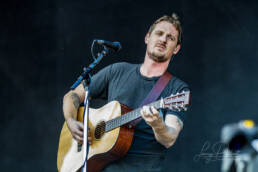
Willie Nelson at Farm Aid 2009 Photograph
This photo is one of the most published photos of Willie Nelson in existence. It’s been used on Wikipedia for years, and has been published in newspapers, websites, books and albums all over the world. Willie’s people have used this image on at least two albums. There was another photographer just a few feet from me at Farm Aid, and his photo is on Getty and widely used, but my photograph has eye contact, and is vertical. The other is horizontal. There’s hundreds of stories about this photo, and without question, it’s made me famous — deserved or not.
Willie’s people have used it on Soundcloud, on his site, used it for two album covers and at least one DVD, I have found, so far. This is extremely flattering for a photographer.

Willie Nelson: The Outlaw Who Sang from the Heart
Willie Hugh Nelson, born April 29, 1933, found music as his refuge. Growing up in Abbott, Texas, he faced hardship early. His parents left, and grandparents raised him. Yet, music filled their home. Gospel hymns in church sparked his soul. At six, he got a guitar, strumming chords by seven. Writing songs became his outlet, a way to process life’s struggles. By 13, he played honky-tonks, earning coins. Music wasn’t just a dream; it was survival. The joy of performing, the pull of the stage—these drove him to make music his life, defying Nashville’s rules to become an outlaw legend.
A Life Rooted in Texas Soil
Willie’s story began in the Depression-era dust of Abbott, Texas. His mother, Myrle, left soon after his birth. His father, Ira, a mechanic, remarried and moved away. Thus, Willie and sister Bobbie were raised by their grandparents, William and Nancy, who loved music. They taught singing, ordered guitar lessons from Chicago, and instilled a love for gospel. Willie wrote his first song at seven, joining a polka band at ten. Meanwhile, he worked cotton fields, absorbing blues and Mexican corridas. At Abbott High, he played football, basketball, and baseball, but music was his constant.
After graduating in 1950, Willie joined the Air Force, but back issues led to a discharge nine months later. He briefly attended Baylor University, studying farming, yet music pulled harder. Through the 1950s, he worked odd jobs—selling vacuums, encyclopedias—while DJing at Texas and Washington radio stations. By 1956, he recorded his first single, “No Place for Me,” in Vancouver. It flopped, but he kept writing. In 1960, he moved to Nashville, determined to break through. His personal life was turbulent. Married to Martha Matthews in 1952, he had three kids—Lana, Susie, and Billy—but the marriage ended in 1962 after a stormy incident where Martha sewed him into a sheet and beat him. He wed Shirley Collie in 1963, divorcing in 1971 after she discovered he fathered a child, Paula, with Connie Koepke. Willie married Connie, had daughter Amy, and divorced in 1988. Since 1991, he’s been married to Annie D’Angelo, with sons Lukas and Micah, finding stability.
A Career Defying the Nashville Mold
Willie’s career began as a songwriter. In Nashville, he joined Pamper Music, penning hits like “Crazy” for Patsy Cline. “Hello Walls” for Faron Young and “Night Life” for Ray Price also soared. However, his own recordings struggled. His nasal voice and off-beat phrasing didn’t fit Nashville’s polished sound. Signed to Liberty Records in 1962, he hit the Top Ten with “Willingly,” a duet with Shirley Collie, and “Touch Me.” Still, success as a performer eluded him. Frustrated, he joined RCA Records in 1965, becoming a Grand Ole Opry member, but his albums flopped. By 1972, after a brief stint pig farming, he retired, moving to Austin.
There, Willie reinvented himself. Growing his hair long, trading suits for denim, he embraced the counterculture. In 1973, he signed with Atlantic Records, releasing Shotgun Willie, a raw concept album. Then, 1975’s Red Headed Stranger, recorded with his band, The Family—sister Bobbie Nelson (piano), Paul English (drums), Mickey Raphael (harmonica), Bee Spears (bass), and Jody Payne (guitar)—catapulted him to fame. The album’s hit, “Blue Eyes Crying in the Rain,” topped country charts. Meanwhile, he co-founded The Highwaymen with Waylon Jennings, Johnny Cash, and Kris Kristofferson, releasing three albums and touring globally. His 1978 album Stardust, a pop standards collection, sold over four million copies, proving his versatility.
Willie’s collaborations are vast. He recorded with Ray Charles, Dolly Parton, Merle Haggard, and Snoop Dogg. Notably, he sang “We Are the World” in 1984 and performed with Rosalynn Carter at the White House. His acting career spans over 30 films, including The Electric Horseman (1979), Honeysuckle Rose (1980), and The Dukes of Hazzard (2005). He appeared on Saturday Night Live in 1977, Wag the Dog (1997), and voiced himself in The Simpsons. In 1985, he co-founded Farm Aid, raising millions for farmers, and launched Willie’s Reserve, a marijuana brand, in 2015. His Fourth of July Picnics, started in 1973, became Texas traditions.
Awards abound. Willie won 12 Grammys, including Best Country Vocal for “Always on My Mind” (1983) and Best Traditional Pop Album for Stardust (1979). He earned 11 CMA Awards, six ACM Awards, and the 1999 Grammy Lifetime Achievement Award. In 1993, he was inducted into the Country Music Hall of Fame, followed by the Songwriters Hall of Fame in 2001. The Library of Congress awarded him the Gershwin Prize in 2015, cementing his legacy.
Biggest Songs and Their Creators
- Crazy: Written by Willie Nelson, this 1961 Patsy Cline hit became a country standard, showcasing his songwriting genius.
- On the Road Again: Penned by Nelson, this 1980 anthem from Honeysuckle Rose topped charts, capturing his wandering spirit.
- Always on My Mind: Written by Wayne Carson, Johnny Christopher, and Mark James, Nelson’s 1982 cover won a Grammy.
- Blue Eyes Crying in the Rain: Written by Fred Rose, Nelson’s 1975 version hit number one, defining his outlaw era.
Controversies and Struggles
Willie’s life wasn’t without turmoil. In 1977, his manager Neil Reshen’s mishandling led to IRS troubles. By 1990, the IRS seized his assets, claiming a $16.7 million debt. Fans bought his possessions at auction, returning them to him, a testament to his bond with them. His son Billy’s 1991 suicide devastated him, yet he kept performing. Willie’s marijuana advocacy stirred headlines. He smoked on the White House roof, as noted in his biography, and faced arrests, like a 2010 charge in Texas. However, he remained unapologetic, launching Willie’s Reserve to promote legalization. His early marriage to Martha was violent, and his political stances, supporting Democrats like Kamala Harris, occasionally divided fans.
A Night Under the Stars
In 1976, Willie’s Fourth of July Picnic in Gonzales, Texas, was unforgettable. Over 80,000 fans swarmed a dusty field. Willie, with long braids and a bandanna, led The Family through a three-hour set. As “Whiskey River” kicked off, the crowd roared, dancing under a scorching sun. One fan, quoted in a Texas Monthly article, said, “It was like Woodstock, but for cowboys.” Waylon Jennings joined for “Good Hearted Woman,” their voices blending perfectly. Despite heat and chaos, Willie’s charisma held the crowd. Backstage, he shared beers with fans, signing autographs on his guitar, “Trigger,” its body worn from years of picking. That night, blending hippies and rednecks, defined the outlaw movement, proving Willie’s vision of uniting audiences through music.
Willie Nelson’s legacy endures. From a cotton-picking kid to a global icon, he redefined country music. His 76th album, The Border, dropped in 2024, showing no signs of slowing. Through Farm Aid, he’s raised millions for farmers. Despite tax woes, arrests, and personal loss, his spirit remains unbroken. At 92, with Trigger in hand, Willie’s still on the road, singing stories of love, loss, and freedom.